
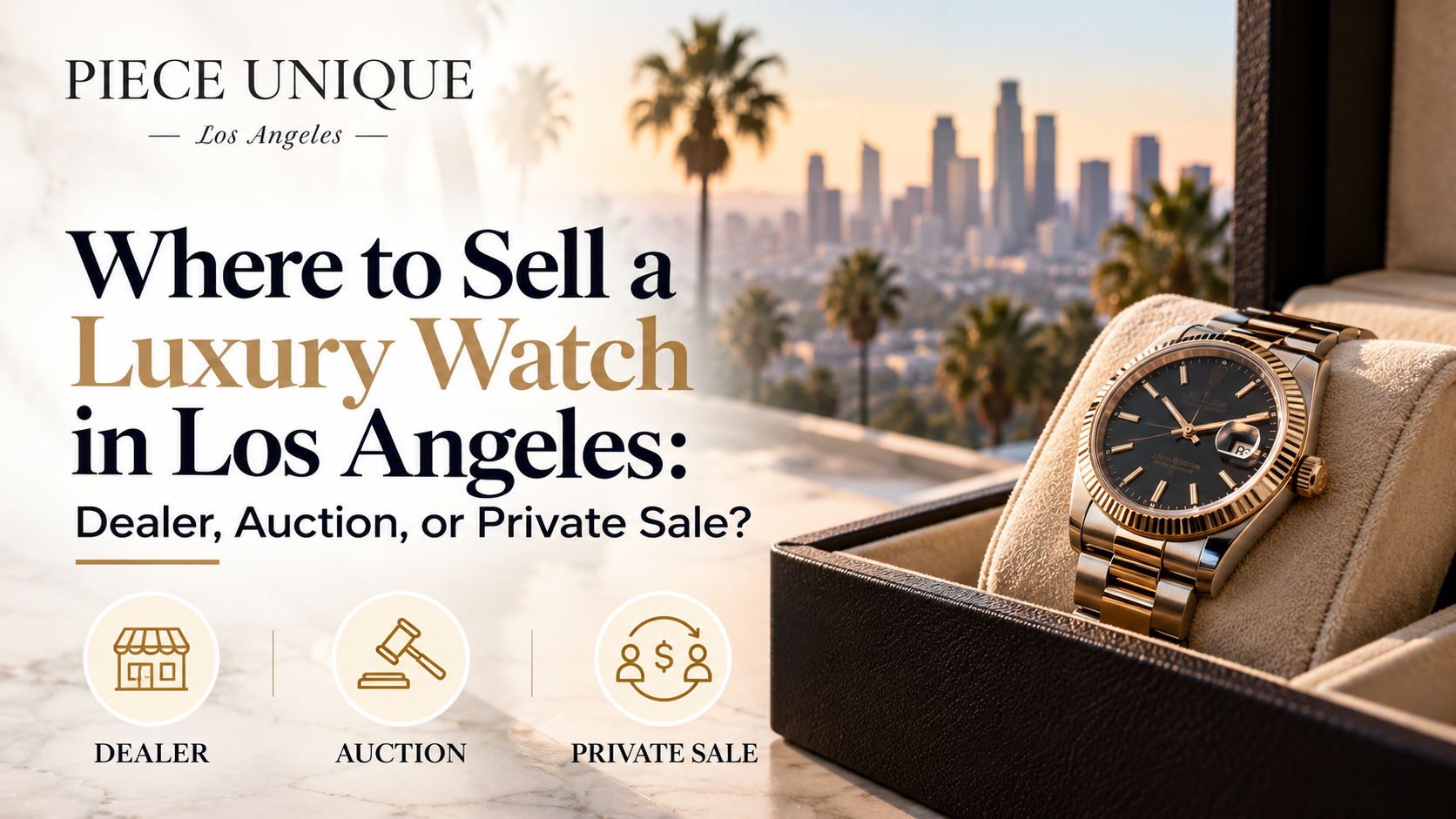
Selling a luxury watch in Los Angeles involves more than finding someone willing to buy it. The selling method you choose can influence the valuation process, timeline, privacy, and overall experience. Luxury watch dealers, auction houses, and private buyers each offer different approaches, and the right fit depends on your watch and selling priorities.
A rare Patek Philippe, a sought-after Rolex, and a modern Audemars Piguet may attract different types of buyers. Understanding how each selling route works can help you compare your options and approach the transaction with realistic expectations.
This guide explains where to sell luxury watches in Los Angeles, how dealers compare with auctions and private sales, and what to consider before handing over a valuable timepiece.
Understanding Your Luxury Watch Selling Options
Luxury watch sellers in Los Angeles generally have three main routes to consider:
- Luxury watch dealers: Businesses that evaluate and purchase watches, often offering a direct transaction.
- Auction houses: Platforms that present watches to potential bidders and facilitate sales through an auction process.
- Private sales: Direct transactions between individual sellers and buyers, often arranged through personal networks or online marketplaces.
Each method has its own process, costs, and considerations. A direct dealer sale may offer a more structured experience, while an auction can provide access to multiple bidders. A private sale gives you greater control over how you communicate with prospective buyers, but it can also require more involvement.
The important step is understanding what each option involves before choosing a selling route.
Selling to a Luxury Watch Dealer in Los Angeles
A luxury watch dealer is a professional business that evaluates timepieces and may purchase them directly from owners. Dealers often have knowledge of specific brands, references, market demand, and the factors that influence resale value.
For sellers who want a straightforward transaction, a direct dealer sale can be a practical option.
How the Dealer Selling Process Works
The process typically involves:
- Submitting details about your watch
- Providing photographs and documentation
- Receiving an initial evaluation or offer
- Arranging an inspection or authentication
- Agreeing to the transaction terms
- Completing payment and transferring ownership
The exact process varies between dealers. Some begin with a remote assessment, while others prefer an in-person inspection before presenting a final offer.
The condition, reference, authenticity, and market demand of your watch will influence the evaluation.
Benefits of Selling to a Dealer
- Structured transaction
A professional dealer may handle much of the evaluation and transaction process, reducing the amount of work required from the seller.
- Specialist knowledge
Dealers who work with luxury watches regularly may be familiar with variations between references, production periods, and collector preferences.
- Potentially faster completion
A dealer that purchases watches directly may be able to complete a transaction without waiting for an auction date or searching for an individual buyer. The timeline depends on the dealer’s process and authentication requirements.
- Greater privacy
Some sellers prefer dealing with a professional business rather than publicly advertising their watch. A private transaction may reduce the amount of personal exposure involved, although privacy practices differ between businesses.
Considerations Before Accepting a Dealer Offer
A dealer purchases a watch with the intention of reselling it or otherwise generating a return. The offer therefore needs to account for the dealer’s costs, risks, and expected margin.
The offer you receive may differ from the price a dealer eventually advertises to a retail customer. This doesn’t automatically mean the offer is inappropriate. It reflects the different purposes of wholesale-style acquisition and retail selling.
Ask the dealer about:
- How the watch was valued
- Whether the offer is preliminary or final
- Authentication requirements
- Payment arrangements
- Any transaction fees
- Expected completion timeline
A clear explanation can help you compare offers more meaningfully.
Selling Through an Auction House in Los Angeles
Auction houses offer a different approach to selling a luxury watch. Rather than selling directly to a business, you consign your timepiece to an auctioneer that presents it to potential bidders.
This approach can be relevant for rare, vintage, and highly sought-after watches that attract interest from collectors.
The auction process can vary considerably between auction houses, so it’s important to understand the terms before committing your watch.
How Luxury Watch Auctions Work
A typical auction process involves:
- Submitting your watch for an initial assessment.
- Having the auction house review its suitability for an upcoming sale.
- Agreeing on consignment terms.
- Arranging photography, cataloguing, and authentication.
- Listing the watch in an auction.
- Waiting for the bidding process to conclude.
- Receiving the proceeds after applicable fees and settlement requirements.
Not every watch is accepted for every auction. The auction house may consider the model, estimated value, condition, provenance, and expected buyer interest.
Some auctions are conducted in person, while others take place online or through a combination of channels.
Potential Benefits of Auction Sales
An auction can expose a watch to collectors who are actively looking for specific references or rare configurations.
When several interested buyers compete for a watch, the final sale price may reflect the demand generated during the auction. However, bidding activity isn’t guaranteed, and the outcome can vary.
Established auction houses may have established audiences interested in particular brands, vintage watches, and collectible references.
A watch with unusual provenance, limited production, or historical significance may attract interest from specialist collectors.
Considerations Before Choosing an Auction
Auction sales involve additional variables that sellers should understand before committing.
1. Fees and Commissions
Auction houses may charge seller commissions and other applicable costs. The exact fee structure depends on the auction house and the terms of your agreement.
2. Timeline
You may need to wait for a scheduled auction, cataloging, authentication, and settlement. This can make the process less predictable than a direct purchase.
3. Reserve Prices
Some auctions allow sellers to establish a reserve price, subject to the auction house’s terms. Other arrangements may differ. Confirm how the reserve works and what happens if your watch does not sell.
4. Uncertain Final Outcome
An auction does not guarantee that your watch will achieve a specific price. The final result depends on bidder interest, the auction environment, and the characteristics of the watch.
Before consigning your watch, request a written explanation of the expected fees, timeline, reserve arrangements, and payment terms.
Private Sale: Selling Directly to an Individual Buyer
A private sale involves selling your luxury watch directly to another person rather than through a dealer or auction house.
This can take place through personal contacts, collector communities, online marketplaces, or other arrangements.
Private selling may appeal to owners who want to communicate directly with prospective buyers and have more control over the listing and negotiation process.
However, it also requires the seller to manage more aspects of the transaction.
How Private Luxury Watch Sales Work
A private sale may involve:
- Creating a listing
- Taking detailed photographs
- Describing the watch’s condition
- Responding to inquiries
- Negotiating the price
- Verifying the buyer
- Arranging authentication
- Organizing secure payment
- Completing the transfer
The exact steps depend on where you list the watch and how you arrange the transaction.
A private seller is generally responsible for making sure the description is accurate and that the transaction is handled safely.
Potential Benefits of a Private Sale
1. Direct Communication
You can communicate directly with interested buyers and answer questions about the watch’s history, condition, and documentation.
2. Control Over Asking Price
You can set an asking price and negotiate with prospective buyers. However, this does not guarantee that buyers will accept your price.
3. Access to Collector Communities
Rare or specialized watches may attract interest from collectors who are actively searching for a specific reference.
4. Flexibility
Depending on the platform or arrangement, you may have greater control over when and how you present your watch to potential buyers.
Risks and Considerations
Private sales require careful attention to security, authenticity, and transaction management.
1. Buyer Verification
You may need to confirm that the person you are dealing with is genuine and capable of completing the transaction.
2. Payment Security
High-value transactions require reliable payment arrangements. Avoid releasing your watch based solely on screenshots or unverified payment confirmations.
3. Personal Safety
Meeting an unfamiliar buyer to exchange a valuable watch creates additional security considerations. A secure, professionally supervised setting may be preferable to an informal meeting.
4. Authentication Disputes
Buyers may request independent authentication or raise concerns about a watch’s originality. Clear documentation and accurate descriptions can help reduce misunderstandings, but they do not eliminate the possibility of disputes.
5. Time Commitment
Finding a buyer, responding to inquiries, arranging viewings, and negotiating the sale can require considerable time and effort.
Sellers who prioritize convenience and a structured transaction should consider these responsibilities before choosing a private sale.
Dealer vs. Auction vs. Private Sale: Key Differences
The three methods differ in how the sale is managed, how pricing is established, and how much involvement is required from the seller.
| Consideration | Dealer | Auction | Private Sale |
| Buyer | Business | Bidders | Individual buyer |
| Pricing | Direct offer | Bidding process | Negotiated asking price |
| Timeline | Depends on dealer | Scheduled process | Depends on finding a buyer |
| Seller involvement | Generally lower | Moderate | Often higher |
| Fees | Depends on arrangement | Seller commissions and other fees may apply | Platform or transaction fees may apply |
| Price certainty | Offer subject to terms | Final price uncertain | Negotiated outcome |
| Authentication | Dealer’s process | Auction house’s process | Seller and buyer must arrange appropriately |
| Privacy | Depends on dealer | Depends on auction house | Depends on platform and arrangement |
How to Choose the Right Selling Method for Your Watch
Your watch’s characteristics can help determine which selling route deserves further consideration.
Selling a Commonly Recognized Luxury Watch
Well-known models from brands such as Rolex, Cartier, and Audemars Piguet may have established secondary-market demand.
A direct dealer evaluation can provide a practical starting point for understanding what a professional buyer is prepared to offer.
Private sales and auctions may also be options, depending on the specific reference and its appeal.
Selling a Rare or Collectible Watch
Rare references, limited editions, and historically significant watches may benefit from specialist attention.
An auction house with relevant collector expertise could be worth exploring. A dealer experienced with rare watches may also be able to evaluate the timepiece directly.
Consider the watch’s provenance, condition, originality, and documentation when comparing your options.
Selling a Vintage Luxury Watch
Vintage watches often require more detailed evaluation because condition and originality can have a substantial impact on collector appeal.
Factors such as dial originality, case polishing, movement components, and service history deserve particular attention.
A specialist familiar with vintage references can help you understand the characteristics that may influence the watch’s value.
Selling a Watch Quickly
If your priority is a relatively straightforward transaction, a direct purchase from a dealer may be worth considering.
The actual timeline depends on the business, authentication process, offer terms, and payment arrangements. Request a clear explanation of the process before proceeding.
Selling a Watch at a Specific Target Price
If you have a particular price in mind, research comparable examples and understand the difference between asking prices and completed sales.
An auction may offer the possibility of competitive bidding, but the final result isn’t guaranteed. A private sale gives you control over your asking price, but finding a buyer at that price can take time.
A dealer offer provides another reference point for understanding the current market.
How to Prepare Your Luxury Watch for Sale
Regardless of which selling method you choose, preparation can make the evaluation process more efficient.
Gather Your Watch’s Documentation
Collect any available:
- Warranty cards
- Original papers
- Purchase receipts
- Service records
- Original box
- Extra bracelet links
- Manufacturer documentation
You don’t need to have every item to begin an evaluation. However, providing accurate information about what’s available can help establish the watch’s background.
Identify the Reference Number
Find the watch’s reference number and serial information where appropriate.
The exact reference helps buyers identify the correct model and compare it with relevant market examples.
Avoid guessing if you’re unsure. Ask a qualified professional to help identify the watch.
Assess Its Condition Honestly
Describe the watch’s condition accurately.
Mention visible scratches, dents, polishing, replacement components, and known mechanical concerns. Avoid overstating the condition or claiming that a watch is completely original without supporting information.
Transparent descriptions can make the evaluation process more productive.
Take Clear Photographs
Photographs should show the watch from multiple angles, including:
- Dial
- Case
- Caseback
- Bracelet
- Clasp
- Bezel
- Any visible damage
- Reference and serial markings, where appropriate
Avoid sharing sensitive information publicly if it could create security or privacy concerns.
Don’t Make Unnecessary Repairs Before Valuation
It can be tempting to polish or service a watch before selling it in an effort to improve its appearance.
However, unnecessary polishing or modifications can affect the watch’s originality. Consult a qualified professional before undertaking work, especially if the timepiece is vintage or collectible.
A professional evaluation can help you understand its existing condition before you spend money on repairs.
Understanding Luxury Watch Valuation in Los Angeles
A watch’s value isn’t determined by its original retail price alone.
A professional evaluation may consider:
- Brand
- Exact reference
- Condition
- Age
- Rarity
- Originality
- Provenance
- Documentation
- Market demand
The location of the sale can influence the pool of potential buyers and the businesses available to you, but there isn’t a single universal Los Angeles price for any particular watch.
For example, the value of a pre-owned Rolex Submariner depends on the exact reference, configuration, condition, and current market demand. The same principle applies to Patek Philippe, Audemars Piguet, Richard Mille, and other luxury brands.
Sellers should also distinguish between a retail asking price and the amount a dealer is prepared to pay for the watch. These figures can differ because the parties have different roles and costs.
If you want to understand your watch’s potential market value, request an evaluation based on the actual timepiece rather than relying exclusively on online listings.
Get a Private Luxury Watch Evaluation From Piece Unique LA
Selling a luxury watch starts with understanding its value and choosing a reliable way to complete the transaction. A professional evaluation helps you assess your watch’s condition, documentation, and market appeal, giving you a clearer foundation for your selling decision.
Piece Unique provides a discreet way to explore your luxury watch selling options in Los Angeles. Whether you are ready to sell or simply want to understand your watch’s potential value, taking the time to discuss your options can help you move forward with greater confidence.
Connect with Piece Unique professionals and begin your luxury watch selling journey.
Frequently Asked Questions
1. How can I sell a luxury watch in Los Angeles?
You can explore luxury watch dealers, auction houses, and private sales. Each method has different processes, costs, timelines, and levels of seller involvement.
2. Is it better to sell a luxury watch to a dealer or at auction?
The right choice depends on your watch, selling priorities, and the terms available. A dealer may offer a direct transaction, while an auction provides a bidding process with an uncertain final outcome.
3. Can I sell a luxury watch without the original box and papers?
Yes. Missing accessories don’t automatically prevent a sale. However, documentation can influence buyer confidence and the valuation of some timepieces.
4. How do I get the best price for my luxury watch?
Identify the exact reference, assess its condition, gather documentation, and compare relevant market examples. You can also obtain evaluations from multiple qualified buyers to understand available offers.
5. Does the condition of my luxury watch affect its selling price?
Yes. Cosmetic wear, mechanical performance, originality, polishing, and service history can influence how a watch is valued.
6. How long does it take to sell a luxury watch in Los Angeles?
The timeline varies depending on the selling method. Direct dealer sales may be completed after evaluation and authentication, while auctions and private sales can take longer.
7. Are private luxury watch sales safe?
Private sales require careful attention to buyer verification, payment security, authentication, and meeting arrangements. Use appropriate safeguards when handling valuable timepieces.
8. Should I polish my luxury watch before selling it?
Don’t assume polishing will improve its value. Excessive polishing can alter case geometry and affect collector appeal, particularly for vintage or collectible watches. Seek professional advice before making changes.
9. What brands can I sell through Piece Unique?
Piece Unique LA states that it purchases authentic watches from Rolex, Patek Philippe, Richard Mille, Audemars Piguet, Cartier, and Vacheron Constantin, along with other rare and noteworthy timepieces.
10. How can I request a luxury watch evaluation from Piece Unique?
Visit the sell your watch page and submit the requested details about your timepiece, including its brand, model/reference, year, condition, and documentation.